Can Orthodontic Treatment Improve Speech? Understanding the Connection Between Teeth and Pronunciation

Speech plays an important role in everyday communication, but some people find certain sounds difficult to pronounce clearly. While speech difficulties can have several causes, the position of the teeth, the alignment of the jaws, and the way the tongue moves can sometimes contribute to pronunciation challenges.

This raises an important question: Can orthodontic treatment improve speech?

In some cases, correcting specific tooth alignment or bite problems may help improve speech clarity. However, orthodontic treatment does not resolve every speech difficulty. Understanding the connection between your teeth, bite, and speech can help you determine when an orthodontic evaluation may be beneficial.

How Are Teeth and Speech Connected?

Clear speech requires coordination between the tongue, lips, teeth, and other structures involved in producing sounds. The tongue moves into specific positions, while air passes through the mouth to create different sounds.

When teeth are significantly misaligned or the bite does not fit together properly, these movements may be affected in some individuals.

For example, certain sounds require the tongue to approach or touch specific areas near the teeth. An open bite, prominent front teeth, or other dental alignment concerns may influence how some people produce these sounds.

However, speech difficulties may also be associated with hearing differences, developmental factors, neurological conditions, or learned speech patterns. An orthodontist can assess dental alignment, while a speech-language pathologist can evaluate speech production when needed.

Which Orthodontic Problems May Affect Speech?

Not every orthodontic problem causes speech difficulties. However, some conditions may contribute to pronunciation challenges.

1. Open Bite

An open bite occurs when certain upper and lower teeth do not meet when the mouth is closed. Depending on its location and severity, this gap may affect how the tongue and air move during speech.

Some individuals with an open bite experience difficulty producing particular sounds. An orthodontist can assess whether bite correction may help address the underlying dental concern.

2. Protruding Front Teeth

When the upper front teeth extend significantly forward, the relationship between the teeth, lips, and tongue may affect speech production in some cases.

Orthodontic treatment may help reposition the teeth and improve their alignment. Whether this improves pronunciation depends on the cause of the speech difficulty.

3. Misaligned Teeth and Bite Problems

Crowded teeth, spacing, and certain bite irregularities can influence the space available for the tongue during speech.

Explore our guide to common orthodontic problems to learn more about dental alignment concerns and the treatment options that may be available.

4. Persistent Thumb Sucking or Tongue Thrusting

Prolonged thumb sucking and tongue thrusting can contribute to changes in tooth position and bite development in some children. These habits may also be associated with certain speech difficulties.

Identifying the habit and evaluating the bite can help determine whether orthodontic care, habit management, or additional professional support may be appropriate.
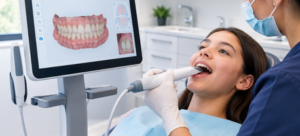

Can Braces Help Improve Speech?

Braces may help improve speech in some cases when a dental alignment or bite problem contributes to pronunciation difficulties.

Braces gradually move teeth into planned positions, helping correct crowding, spacing, and selected bite problems. If a dental irregularity is affecting how the tongue or lips produce particular sounds, correcting that irregularity may help.

However, braces are not a direct treatment for every speech disorder. Some patients may continue to need speech therapy even after their teeth are properly aligned.

Learn more about braces treatment at Saint Louis South Orthodontics to understand the available options.

Can Invisalign Affect Your Speech?

Invisalign uses custom-made clear aligners to move teeth gradually. Because the aligners cover the teeth, some patients notice a temporary change in pronunciation or a slight lisp when they first begin wearing them.

Most patients adjust as they become accustomed to the aligners. Practising speaking and wearing the aligners as directed may help with the adjustment period.

Invisalign may also correct certain bite and alignment problems that contribute to speech difficulties. Its suitability depends on the complexity of the orthodontic issue and the movements required.

Read more about Invisalign clear aligners to learn whether this treatment may be suitable for your needs.

Should You See an Orthodontist or a Speech Therapist?

The right professional depends on the nature of the difficulty.

An orthodontist evaluates tooth alignment, jaw relationships, and bite problems. If these issues may be contributing to speech concerns, the orthodontist can explain appropriate treatment options.

A speech-language pathologist evaluates pronunciation, sound production, and other communication concerns. If a speech difficulty is not primarily caused by dental alignment, speech therapy or another assessment may be more appropriate.

In some cases, working with both professionals may provide the most helpful approach. Treating a dental problem does not automatically correct a learned speech pattern, so an individual evaluation is important.

When Should You Consider an Orthodontic Evaluation?

Consider arranging an orthodontic evaluation if you or your child has noticeably misaligned teeth, an open bite, prominent front teeth, or another bite concern alongside speech difficulties.

An orthodontist can examine the teeth and jaws, assess the bite, and explain whether treatment may help. Depending on the findings, the recommended approach may involve braces, Invisalign, another orthodontic appliance, or monitoring as the teeth and jaws develop.

If you are preparing for an appointment, read our guide to your first orthodontic visit to learn what to expect.

Frequently Asked Questions

1. Can braces correct a lisp?

Braces may help when a lisp is associated with a tooth alignment or bite problem. However, lisps can have other causes, and orthodontic treatment alone may not resolve them. A speech-language pathologist can assess whether speech therapy may also be beneficial.

2. Can crooked teeth affect pronunciation?

Crooked teeth do not necessarily cause speech difficulties. However, significant misalignment or certain bite problems may affect tongue placement and airflow during speech in some individuals.

3. Is it normal to have a lisp after getting Invisalign?

Some patients notice a temporary lisp when they begin wearing clear aligners. This usually improves as they adjust to the appliance. If the change persists or causes concern, contact your orthodontic provider for guidance.

4. Should my child see an orthodontist for speech difficulties?

If your child has speech difficulties along with visible tooth misalignment, an open bite, or other bite concerns, an orthodontic evaluation may help determine whether dental factors are involved. A speech-language pathologist can assess the speech difficulty itself, and both professionals may be involved when appropriate.

Get Personalized Orthodontic Guidance at Saint Louis South Orthodontics

Speech difficulties can have different causes, and understanding the role of tooth alignment is an important step toward finding the right support. When a bite problem contributes to pronunciation challenges, orthodontic treatment may be part of an individualized care plan.

At Saint Louis South Orthodontics, patients can explore personalized orthodontic options for children, teens, and adults.

If you have concerns about tooth alignment, bite development, or how these issues may affect speech, schedule an orthodontic consultation to discuss your needs with the team.

A healthier bite can support better oral function. Start by understanding what is right for your smile.